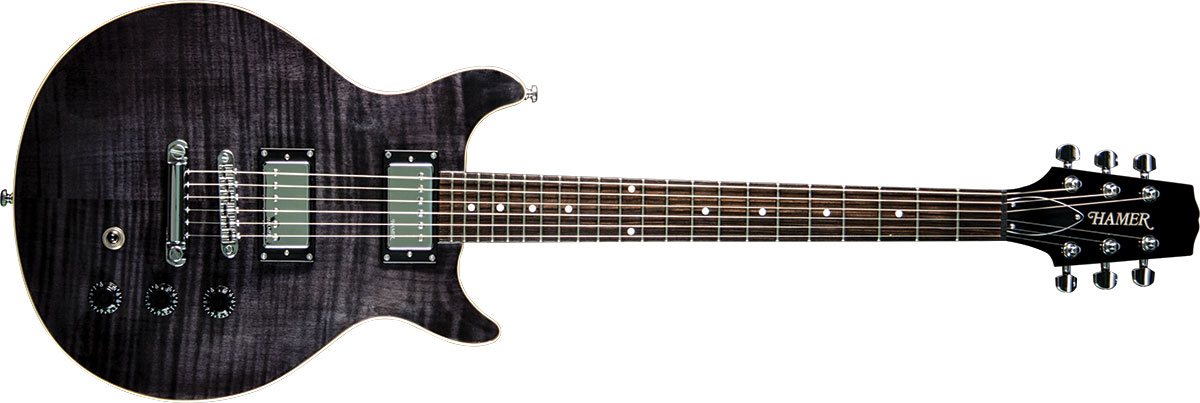



The Hamer Archtop Tremolo
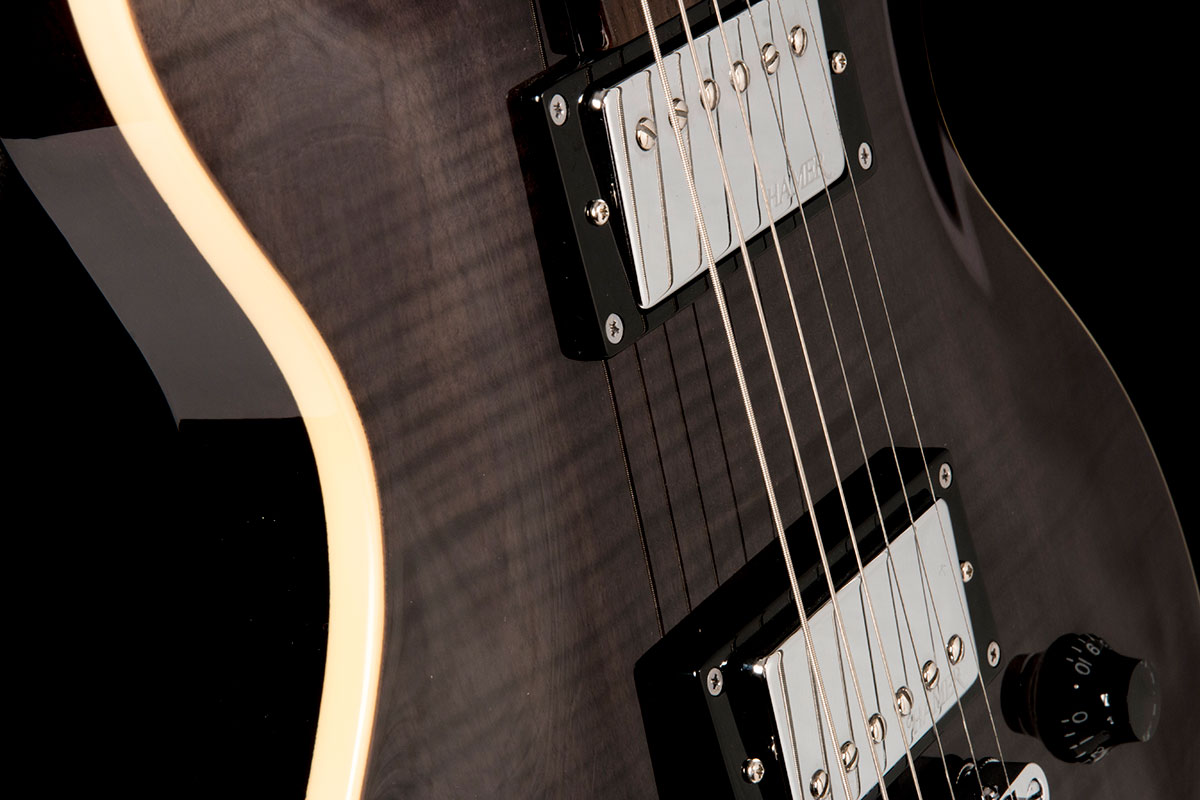
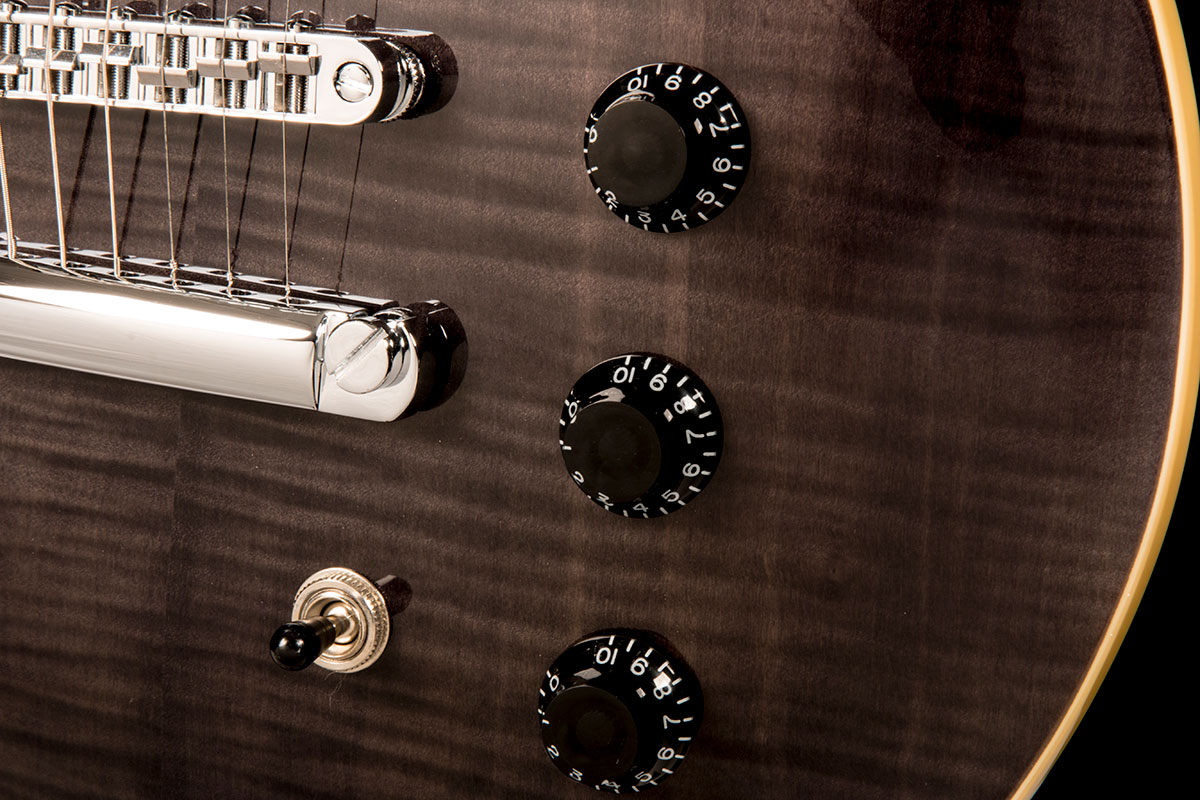
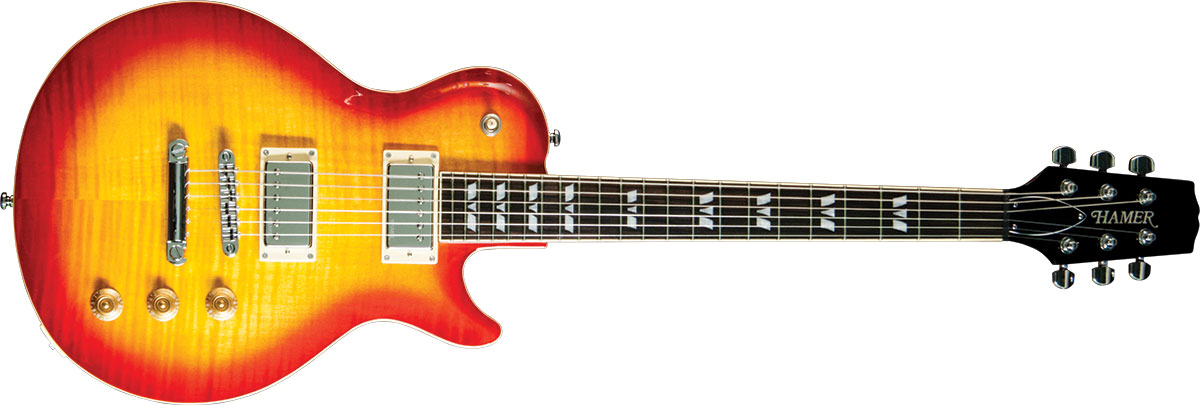
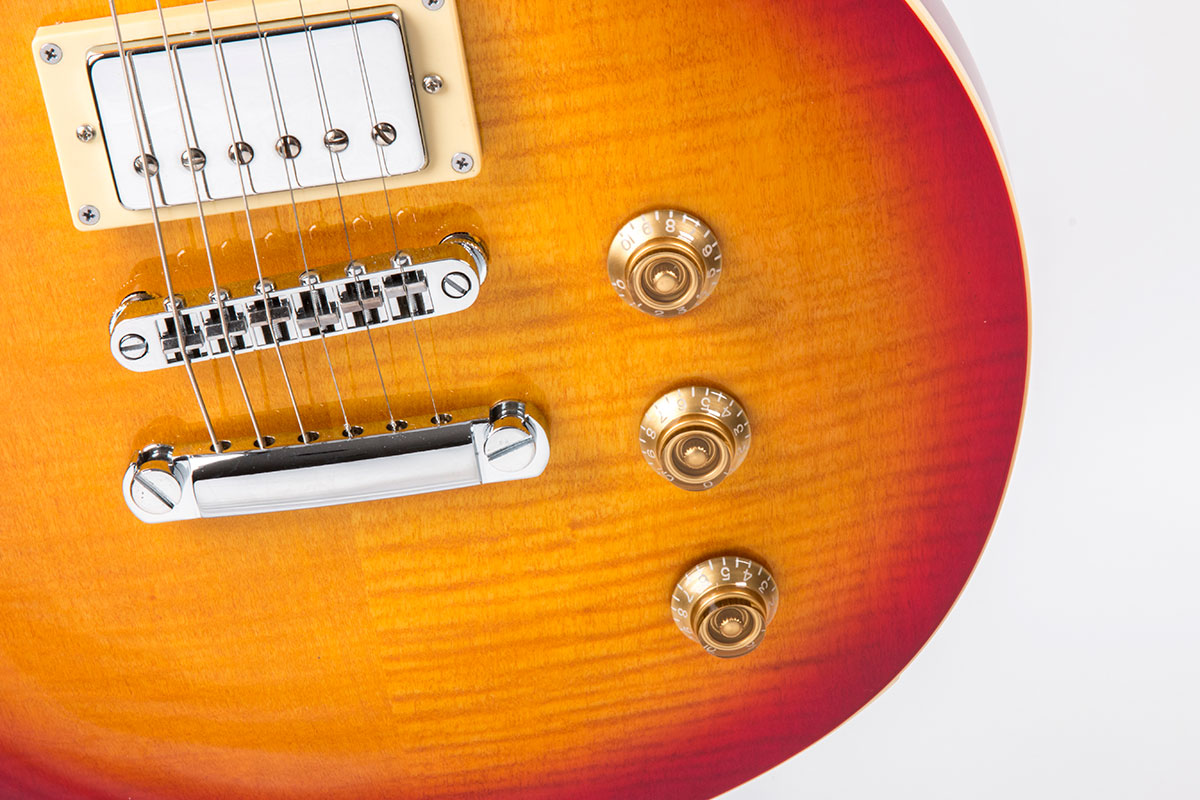
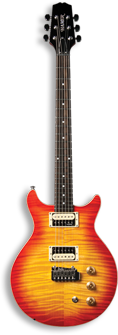
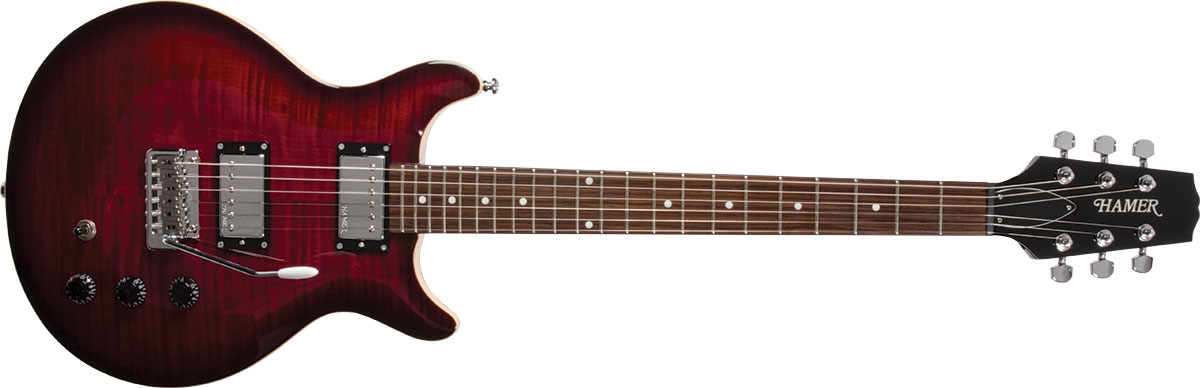
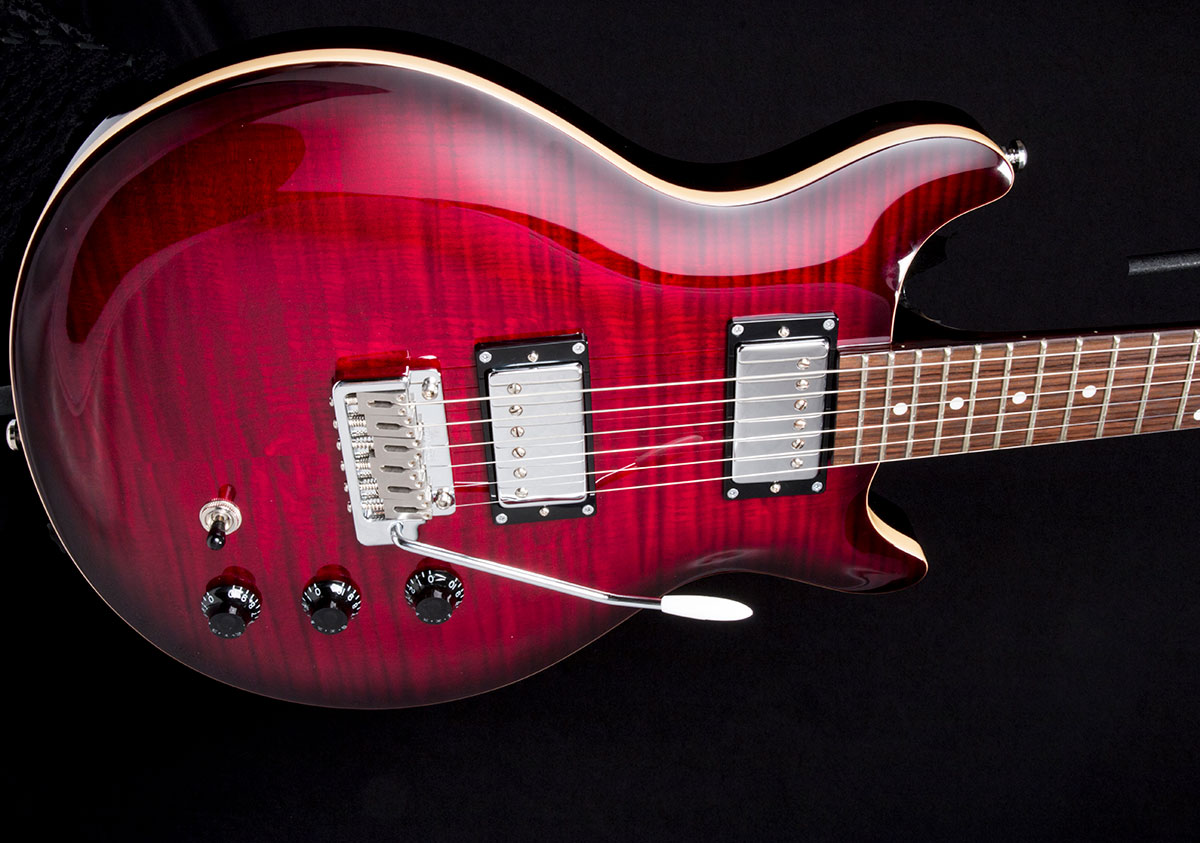
The Archtop Tremolo is based on the Hamer Studio body, the third classic Hamer design introduced in 1977. Upgraded with a solid Maple top on Mahogany body, the tone is beefy yet focused and a Dark Cherry Burst on figured Maple veneer results in a visually inspiring instrument. The SATFW comes standard with a Wilkinson Tremolo and classic Hamer controls and switch orientation.
| MODEL: | The Hamer Archtop Tremolo |
| STYLE: | Double Cutaway |
| TOP: | Flame Maple |
| BRIDGE: | Wilkinson Tremolo Bridge |
| NECK: | Mahogany |
| BODY: | Mahogany |
| FRETBOARD: | Ebony |
| INLAYS: | Dot |
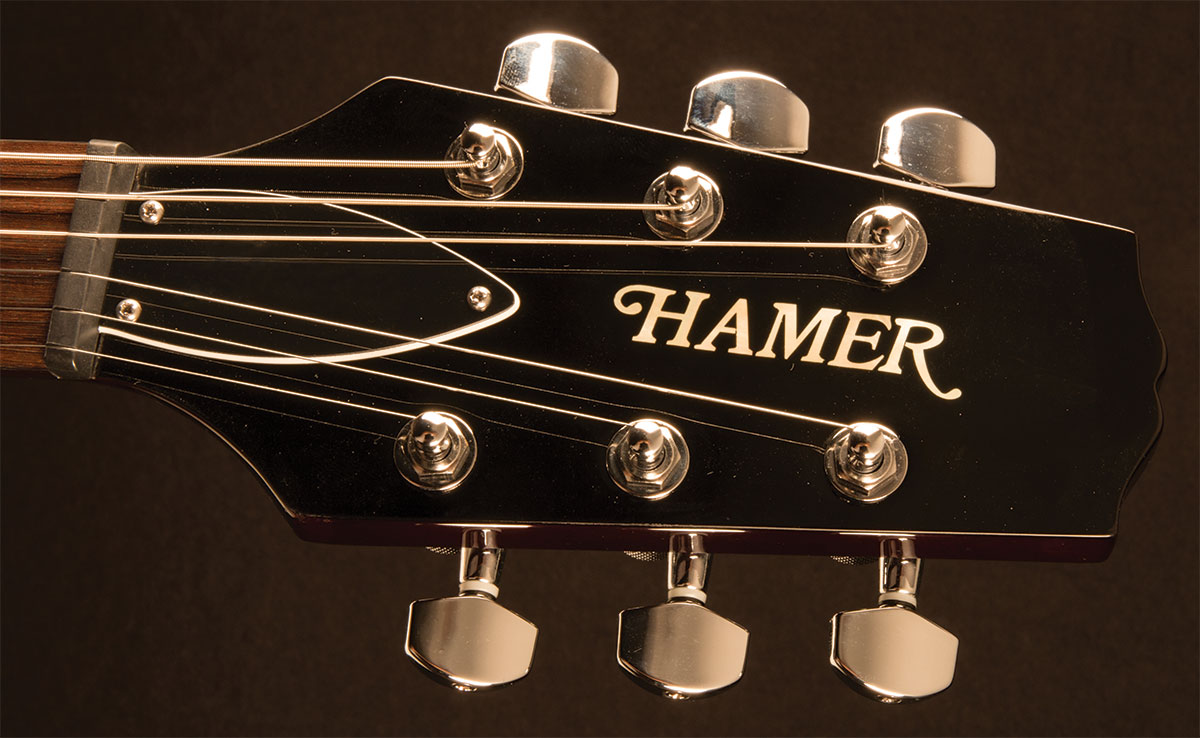
| NUT: | Graphite |
| NUT WIDTH: | 1 5/8" |
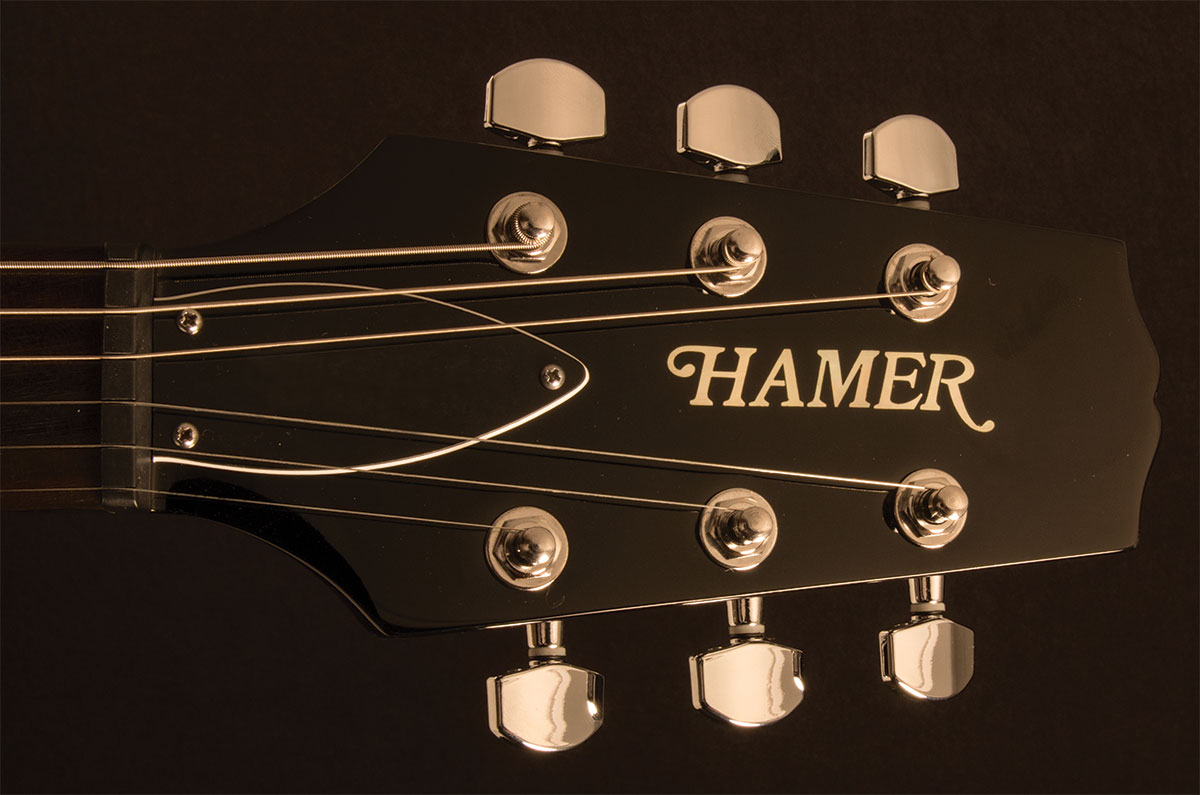
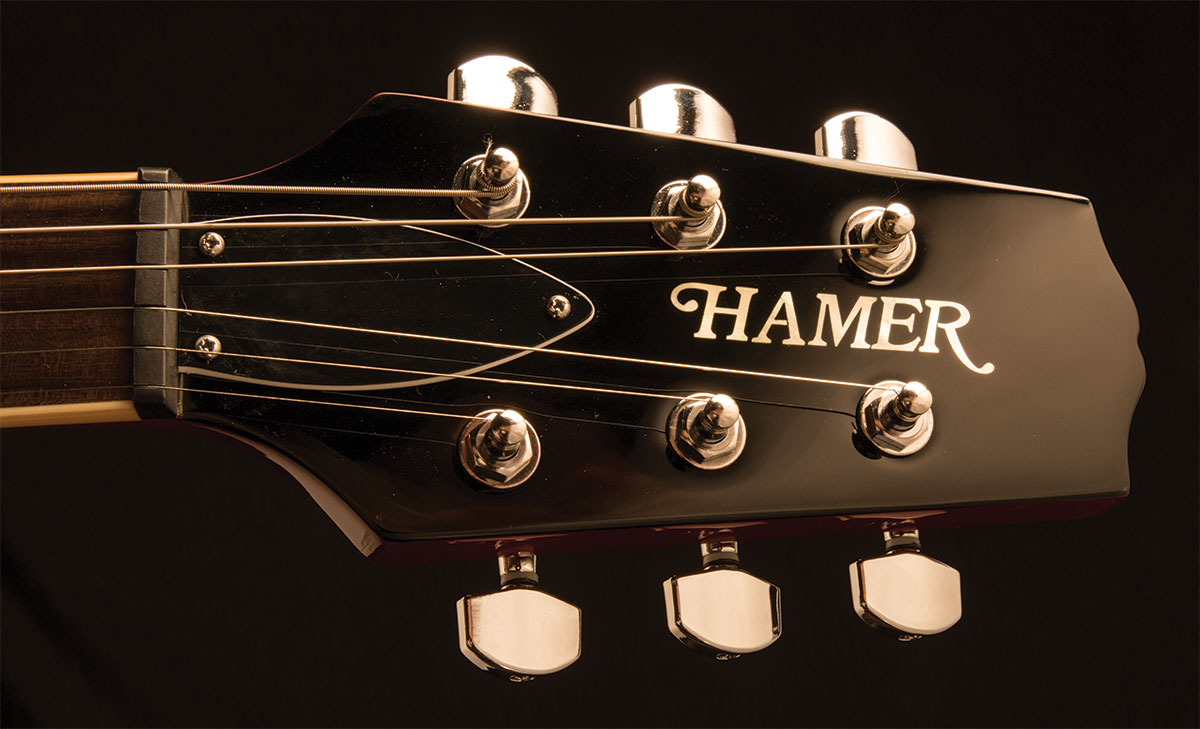
| TUNERS: | Locking Chrome Diecast |
| SCALE: | 25 1/2" |
| PICKUPS: | 2 Hamer Humbuckers |
| CONTROLS: | 2 Volume, 1 Tone |